The Ultimate Guide to Mobility Scooter Maintenance
Owning a mobility scooter isn't just about having a piece of equipment; it’s freedom.
Whether it’s a trip to the grocery store or a cruise through the park, your scooter is your ticket to independence, however, like any vehicle, a little TLC goes a long way. To keep your ride smooth, safe, and reliable, follow this simple guide to scooter maintenance.
1. The Heart of the Machine: Battery Care
The battery is the most critical (and often most expensive) component. If you treat it well, it will return the favor with a long lifespan.
Charge Daily: Even if you only used it for a quick trip, plug it in. Most modern chargers won't overcharge, and keeping the battery topped up prevents "deep discharge" damage.
The 8-Hour Rule: Try to give your scooter a full charge (usually 8–10 hours) overnight.
Off-Season Storage: If you aren't using the scooter for a few weeks, charge it fully first and try to power it up for a refresh charge once a month.
2. Check Your Pressure (Tires)
Low tire pressure makes the motor work harder, which drains your battery faster and wears down the tread.
Pneumatic Tires: If your scooter has air-filled tires, check the PSI levels weekly. The recommended pressure is usually printed on the side of the tire.
Solid Tires: If you have solid "puncture-proof" tires, inspect them for cracks or flat spots that could cause a bumpy ride.
3. Keep It Clean (and Dry)
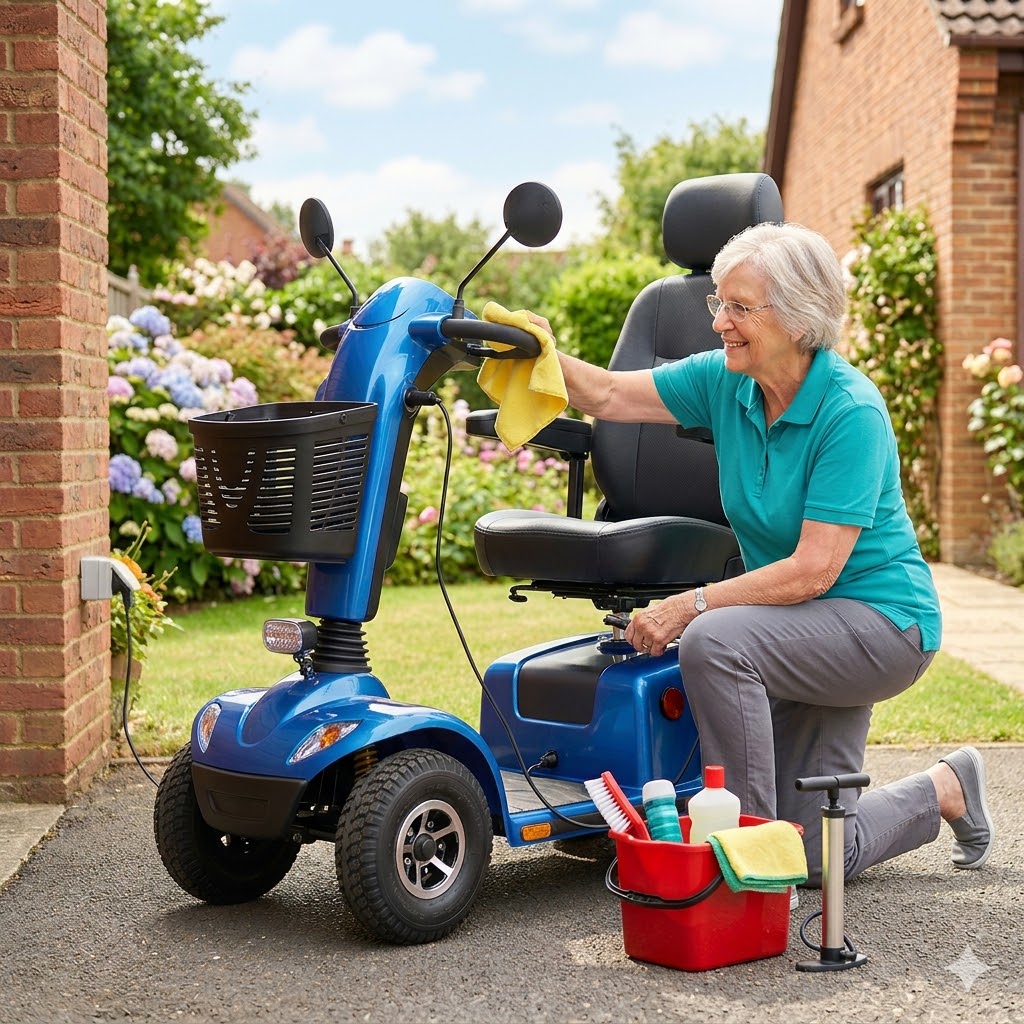
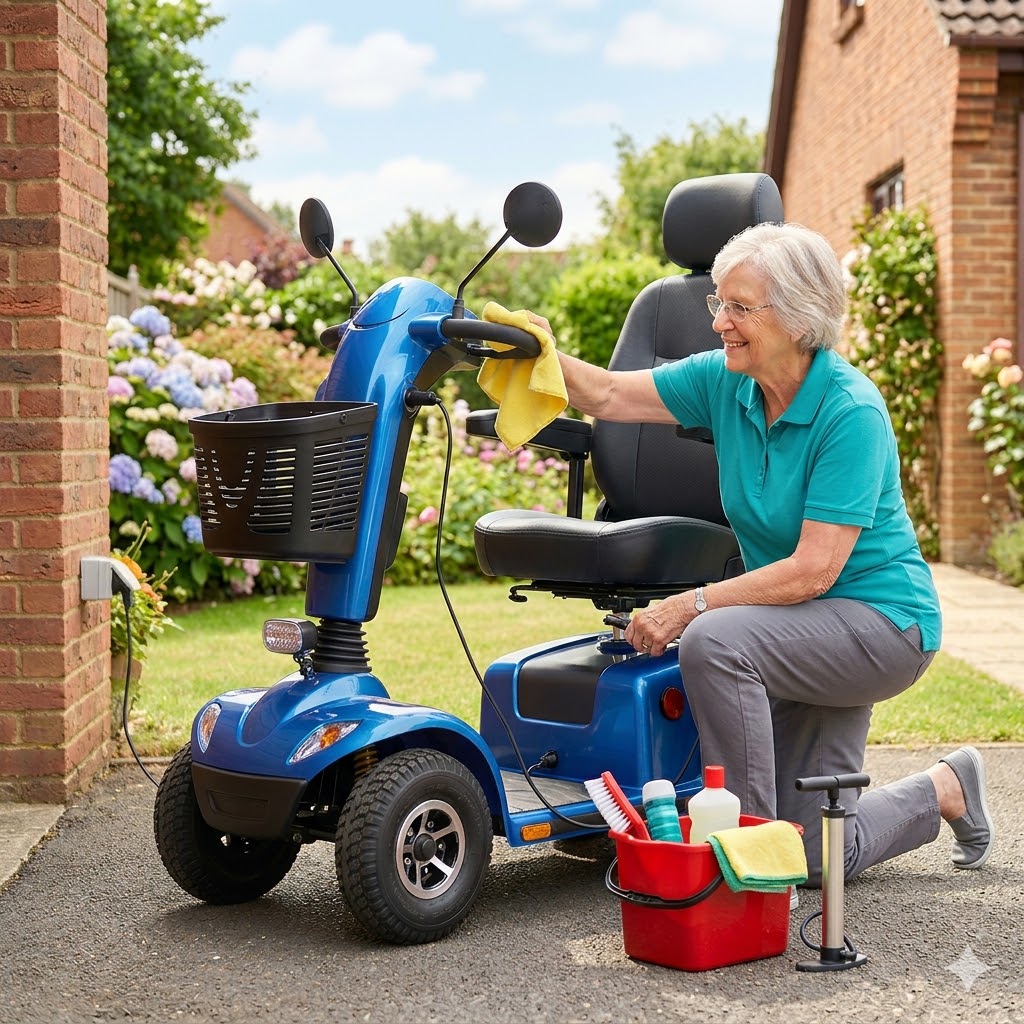
A clean scooter doesn't just look better; it performs better. Dust and grit can get into the moving parts and act like sandpaper.
The Wipe Down: Use a damp (not dripping) cloth with mild soap to clean the bodywork.
Avoid the Hose:Never spray your scooter with a garden hose. The electronics are sensitive, and water can damage your chair beyond repair.
The Underside: Occasionally check for caught debris, like plastic bags, hair or long grass, around the axles. Keeping this clean ensures the wheels and axles move easily without straining the battery and motor.
4. Storage Matters
Where you park your scooter is just as important as how you drive it.
Cool and Dry: Extreme heat can degrade the battery, and moisture leads to corrosion. A garage or a dedicated "scooter port" inside is ideal.
Cover Up: If you must store it in a shed or carport, use a breathable waterproof cover to protect it from dust and dampness.
Regular Maintenance Checklist
Task
Frequency
Charge Battery
After every use
Wipe down upholstery/tiller
Weekly
Check tire pressure/tread
Monthly
Inspect lights and indicators
Monthly
Replace Battery (SLA/Gel)
Annually
Pro Tip: Listen to your scooter! if you start hearing unusual squeaks, grinds, or rattles, don't wait for a breakdown. Most issues are much cheaper to fix when caught early.
The Bottom Line
A clean, well-maintained scooter is a safe scooter. By spending just 10 minutes a week on basic checks, you ensure that your "wheels" are always ready for your next adventure.